
2026-08-20 · Mike Hernandez
Understanding Local Flood Zones Around Davie and Canal Areas
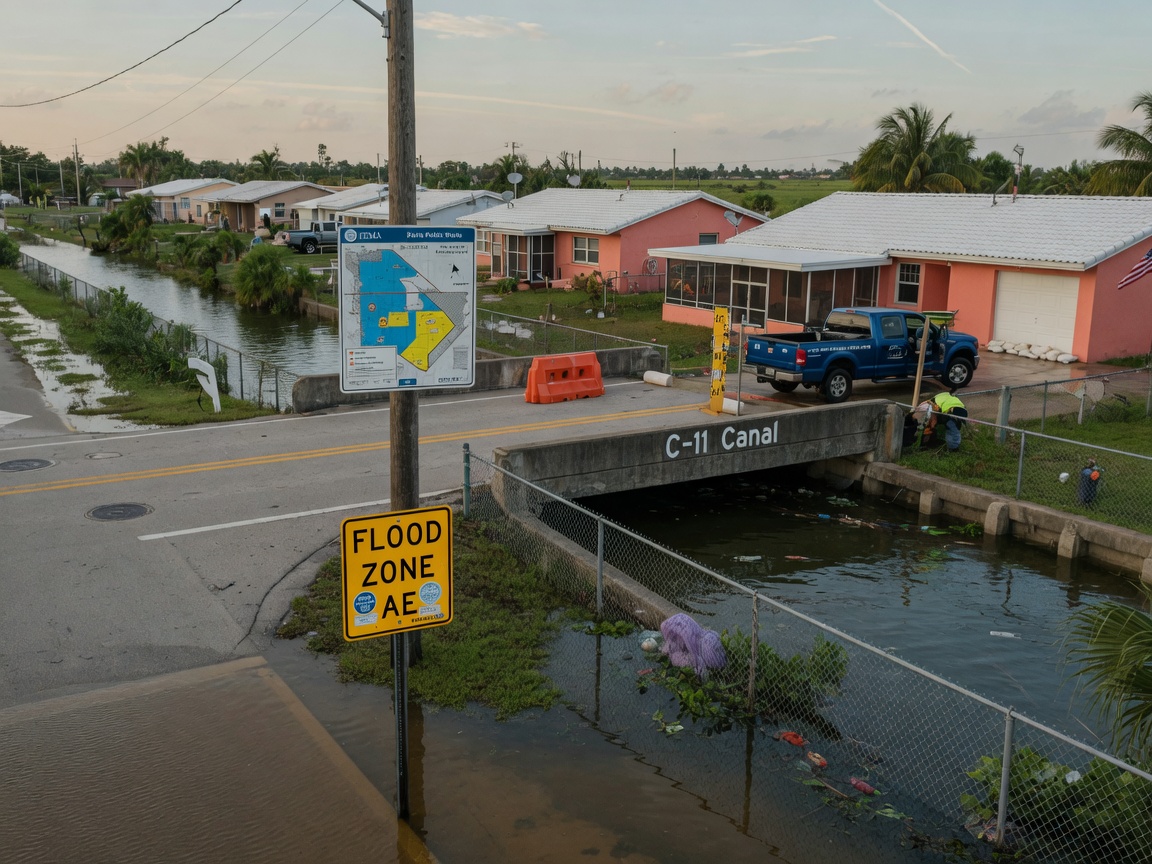
Davie properties near major canals face elevated flood risks during heavy seasonal rains because the flat terrain and drainage network direct water into residential zones faster than many older homes were designed to handle.
Mapping Flood Zones Around Davie Canals
Broward County uses FEMA base flood elevation data to classify zones in Davie, with many canal-adjacent blocks falling into AE or VE categories where water can rise several feet during intense storms. Homeowners along the C-11 and North New River Canal corridors see water levels climb quickly because these waterways serve as primary drainage routes for the entire region. Older subdivisions built before updated elevation requirements often sit below current base flood elevations, which means even moderate rainfall events can push water into yards and crawl spaces. Checking the county's interactive flood maps reveals pockets near Davie Road and Orange Drive where properties require additional elevation or barriers. These designations directly affect how quickly water enters structures and how long drying takes after the event subsides.
Canal Drainage Realities in Broward County
Davie's canal system was engineered decades ago to manage agricultural runoff and now handles stormwater from expanding neighborhoods in nearby Plantation and Cooper City. During the wet season from June through October, pumps along these canals work around the clock, yet localized flooding still occurs when rainfall exceeds two inches per hour. Silt and debris buildup in older canal segments reduces flow capacity, forcing water over banks into adjacent yards in areas like the Davie Shores and Pine Island Ridge sections. The sandy soil common throughout the county allows rapid infiltration in dry periods but becomes saturated quickly, turning streets into temporary rivers that feed back into residential lots. Crews responding to these events routinely encounter standing water that lingers for days because natural drainage slopes are minimal across the landscape.
Housing Stock and Water Entry Points
Many Davie homes constructed between the 1970s and 1990s feature slab-on-grade foundations or low crawl spaces that sit close to grade, allowing canal overflow to reach door thresholds with less than six inches of street flooding. Sliding glass doors and utility rooms at the rear of properties often become the first entry points when water backs up from canal-adjacent lots. Newer construction in western Davie incorporates higher finished floor elevations, yet connecting streets and driveways still channel water toward garages during peak events. Residents in these homes benefit from knowing exact distances to the nearest canal because even a quarter-mile proximity can determine whether water reaches the structure within the first hour of heavy rain. Inspecting weep holes, door seals, and exterior grading reveals the specific pathways water follows in each block.
Insurance and Response Considerations
Florida policies require separate flood insurance for properties in designated zones, and Davie homeowners near canals often discover coverage gaps only after water enters living spaces. Documenting water levels with dated photos before extraction begins supports claims when adjusters review canal-related events. Flood damage restoration teams familiar with Broward drainage patterns prioritize removing water from behind walls and under flooring before mold sets in during the region's persistent humidity. Preparing Davie homes for hurricane season water risks outlines seasonal steps that reduce canal overflow impacts. Documenting water damage for insurance claims in Florida provides practical checklists for tracking losses from these localized events.
After the Water Recedes
Once canal levels drop, moisture remains trapped in drywall, insulation, and subflooring for weeks unless extraction and drying equipment address hidden pockets immediately. Water damage restoration crews in Davie use moisture meters to locate saturation behind baseboards and in HVAC systems that canal water can contaminate. Homeowners should avoid powering on electrical systems until professionals confirm safe conditions, especially in homes where water reached outlets near canal overflow lines. Monitoring for musty odors in the days following an event helps catch secondary issues before they spread through the structure. Properties in Davie that sit within a few blocks of major canals benefit from annual checks of exterior grading and French drains to maintain positive flow away from foundations during future storms.