
2026-08-20 · Mike Hernandez
Protecting Equestrian Barns From Water Damage Near Davie
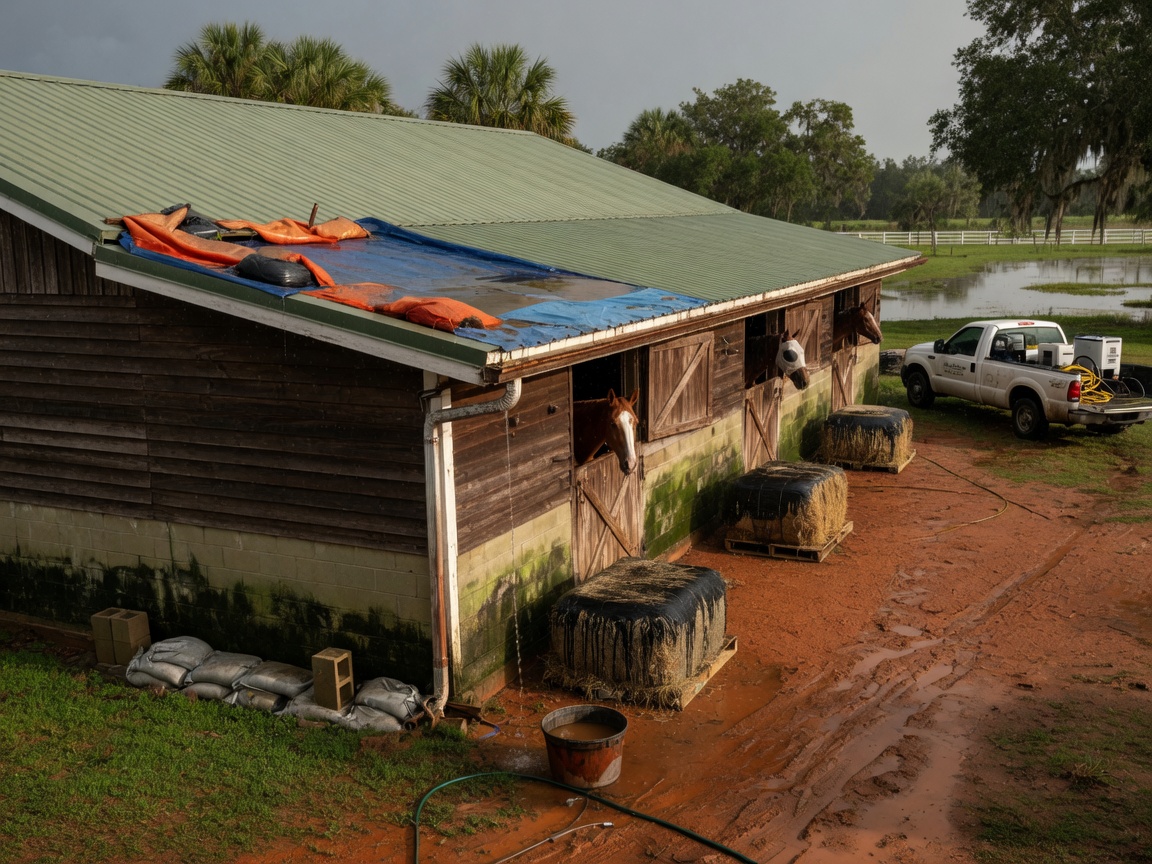
Equestrian barns near Davie require raised foundations, sealed lower walls, and cleared drainage ditches to limit intrusion during heavy summer rains and canal overflow events common in western Broward County.
Local Flood Patterns Affecting Davie Barns
Davie sits amid a network of canals and low-lying pastures that channel water from the Everglades toward the coast. When tropical systems stall or the rainy season peaks from June through October, water backs up quickly around properties west of I-75 and near the C-11 canal. Wooden stall walls and dirt or rubber-mat floors absorb moisture fast, leading to rot in posts set directly into the ground. Owners who grade the perimeter 6–8 inches higher than surrounding pasture and install French drains tied to existing ditches see fewer repeat issues after storms. Checking elevation against Broward County flood maps before each season helps identify which barns need extra barriers at door thresholds.
Common Entry Points in Equestrian Structures
Roof overhangs on many Davie barns stop short of feed rooms and tack areas, allowing wind-driven rain to soak interior walls. Gaps around sliding stall doors and unsealed concrete footings let groundwater wick upward during prolonged wet periods. Hay lofts with missing ridge vents trap humidity that condenses on metal roofing and drips onto stored feed. Walk the interior after each heavy rain and mark every wet spot with tape so patterns become visible over time. Focus repairs first on the south and east exposures that receive the strongest afternoon storms in this part of the county.
Seasonal Preparation Steps Before Rainy Season
Clear vegetation and debris from perimeter ditches by mid-May each year so water can move away from stall rows. Apply exterior-grade sealant to the bottom 24 inches of wooden posts and replace any that show soft spots. Add 4-inch gutters with extensions that discharge at least 6 feet from the building line. Test automatic sump pumps in low areas and keep a backup battery unit on hand. These steps reduce standing water contact time and limit the volume that reaches interior surfaces during a typical 3–5 inch rain event.
Drying and Structural Recovery After Water Entry
Once water reaches stall floors or walls, remove standing water within the first 24 hours using extraction equipment sized for agricultural buildings. Run commercial air movers and dehumidifiers continuously until moisture readings drop below 12 percent on wood and 0.5 percent on concrete. Replace saturated stall mats and discard any hay or bedding that has been submerged. For larger commercial barns, Water Damage Restoration teams familiar with livestock facilities can coordinate temporary relocation of horses while drying proceeds. Monitor for hidden moisture behind feed bins and under rubber flooring that can trigger mold within 48–72 hours in Davie’s humidity.
Ongoing Monitoring and Long-Term Upgrades
Install battery-powered moisture alarms in each feed room and near low spots in the aisle. Re-grade driveways and turnout areas every 2–3 years to maintain positive drainage away from the structure. Consider elevating new stall construction on concrete piers rather than slab-on-grade when replacing older barns. Review the Understanding Local Flood Zones Around Davie and Canal Areas resource for updated maps before any major renovation. These habits keep water away from the building envelope and reduce the frequency of full-scale restoration work.
Routine checks tied to Davie’s actual weather cycles and canal levels deliver the most reliable protection for local equestrian properties.