
2026-08-20 · Mike Hernandez
Preventing Mold Growth After Minor Leaks in Florida Humidity
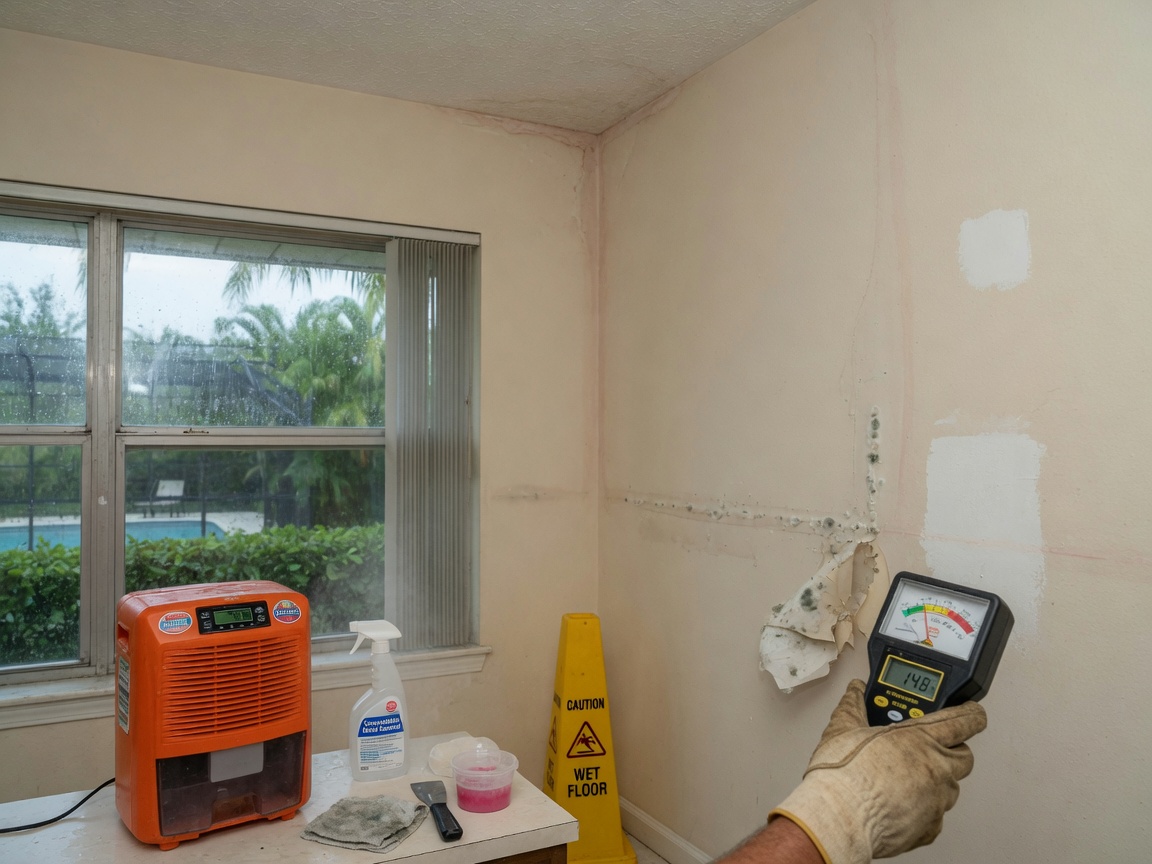
Mold growth after a minor leak in Davie can start within 24-48 hours when indoor humidity stays above 60 percent, which happens often in the area's subtropical climate. Quick removal of standing water followed by thorough drying prevents spores from settling into drywall, baseboards, or subfloors common in local single-family homes built from the 1970s onward.
Why Florida Humidity Speeds Mold After Leaks
Davie sits in Broward County where summer dew points often push relative humidity to 70-90 percent for weeks at a time. This moisture lingers in wall cavities and under vinyl flooring longer than in drier regions, allowing mold colonies to form on organic materials like wood framing or carpet padding. A slow drip from a bathroom fixture or roof penetration that might stay contained elsewhere can spread through the slab-on-grade construction typical here. Homeowners notice musty odors first in closets or laundry rooms because those spaces receive less airflow. Addressing the source within hours rather than days keeps the affected area small and limits hidden growth behind cabinets or in attics.
First Actions After Discovering a Minor Leak
Shut off the water supply at the fixture or main valve right away, then extract visible water with towels or a wet vac. Move furniture and belongings away from the wet zone to avoid secondary damage. Open windows and run exhaust fans if outdoor humidity is lower, but avoid this during peak afternoon rains when moist air enters the home. Place a dehumidifier set to 45-50 percent in the room and check its collection bucket every few hours. Document the leak location and any discoloration with photos for insurance records. These steps reduce the window for mold before professional equipment arrives.
Effective Drying Methods for Local Conditions
Standard box fans alone rarely suffice in Davie because they recirculate humid air instead of removing it. Use commercial air movers aimed at wet surfaces combined with a 70-pint or larger dehumidifier to pull moisture from porous materials like drywall and plywood subfloors. Monitor moisture levels with a meter until readings drop below 15 percent on wood and 1 percent on concrete slabs. In older Davie neighborhoods near the canals, elevated groundwater can slow evaporation from below, so check crawl spaces or slab edges if the leak occurred near an exterior wall. Running equipment continuously for 3-5 days often brings levels safe enough to prevent mold without tearing out finishes.
Monitoring and Long-Term Prevention Steps
Check the area daily for new discoloration or odors during the first week after drying. Install a small digital hygrometer in affected rooms to track humidity year-round, especially during hurricane season when leaks increase. Seal small gaps around pipes with caulk rated for humid environments and ensure attic ventilation meets current Florida building standards. Schedule annual inspections of water heaters and washing machine hoses, both common leak sources in homes 20-30 years old around Davie. If moisture returns or readings stay elevated, contact specialists for structural drying services before spores spread further.
When Professional Help Becomes Necessary
If the leak affects more than a few square feet or water reaches carpet padding and insulation, DIY drying rarely reaches hidden pockets. Pros bring moisture meters, HEPA air scrubbers, and infrared cameras to locate damp spots behind tile or under cabinets that homeowners miss. In Davie properties near Plantation, FL where older plumbing runs through concrete, hidden leaks often require targeted demolition followed by mold remediation if growth has already started. Early intervention keeps costs and disruption lower than full room rebuilds later. For guidance on humidity effects specific to South Florida homes, see this related article on how high humidity slows drying after water intrusion in South Florida.